
Recovery is possible.
Each year this event brings together a diverse array of professionals to increase their collaborative response and knowledge of promising, evidence-based strategies and best practices. Treatment Providers, Social Workers, Health Care Providers, Pharmacists, Prevention Specialists, Social Workers, Community Coalitions, Emergency Medical Services, Public Health Professionals, Law Enforcement, Legislators and Educators convened for the eighth year at DCCCA’s annual Opioids and Stimulants conference.
Topics on emerging trends, effective prevention efforts, coordinated response and safety, clinical interventions, resource sharing, and informed treatment and recovery systems of care were covered.
The take-home message every year is one of hope:
Recovery is possible.
We need more comprehensive, empathetic, robust systems of care that treat and support the individual. All of us play a part by making the road to recovery more smooth. We need to be ready to love and support someone the moment they are ready to detox. There are medically assisted treatments to help detox safely. There is help. There is hope. Recovery is possible, for everyone. Strong internal and external, human-centered resources make it possible to achieve and sustain recovery. Healing past traumas can result in safer communities, family reunification, and so much more.
Sessions included:
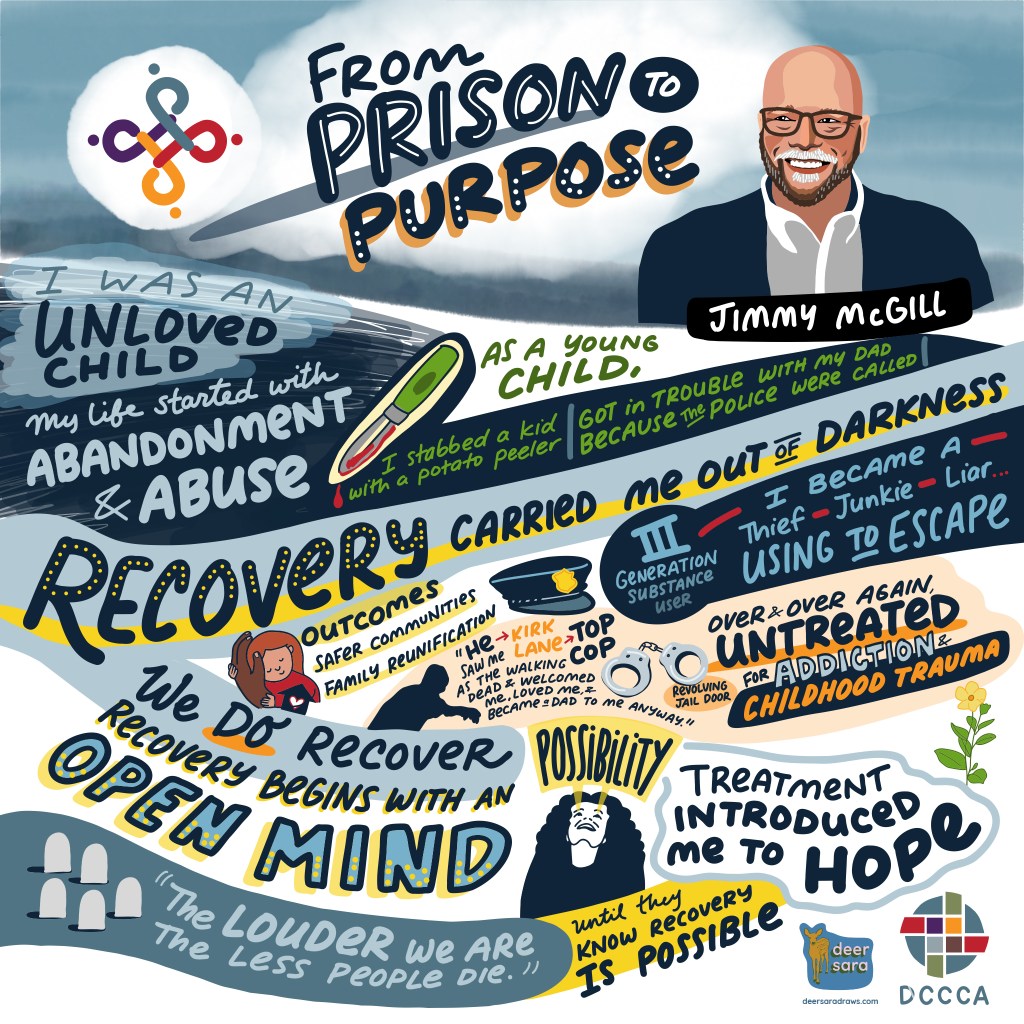
Jimmy McGill, From Prison to Purpose
Presenter- Jimmy McGill
This was Sara’s second experience listening and live illustrating for Jimmy McGill, a remarkable person with a difficult upbringing. Jimmy’s message is incredibly powerful and is a reminder that the underlying reasons for substance use need treated, as much as the substance use itself. In his case, addressing the experience of abuse and abandonment in his and his family’s history was key to find healing and remain in long-term recovery. In and out of jail throughout his young life, his addiction and childhood trauma was left untreated. He lives his purpose today by speaking about substance use and recovery because “the louder we are, the less people die,” and will continue to speak until everyone understands that recovery is possible. Jimmy operates a recovery center in Arkansas for what he calls “knuckleheads” like him.
Beware the Shopkeep’s Potions

Presenter- Luke Rosebraugh
7-OH/Kratom, aka “gas station heroin” is advertised as an unassuming supplement, but is highly addictive, and often used to replace opioid withdrawal. The drug is not yet regulated by any governing bodies, but this will likely change. When the laws around the substance change, people who have been freely buying and using Kratom may suddenly find themselves without access.
When that happens, we risk sending people into withdrawals with no access to treatment options.
Practitioners shared concern and advocated to inform shopkeepers of contact information for treatment, mentioning that they should distribute to those seeking Kratom after regulation is enacted. We must be ahead of this crisis.
Human-Centered Understanding of Substance Misuse and Substance Use Disorder

Presenter- Hanna Prince
Using is not a moral failing. If we take a brain-centered approach, there is a 1,000% dopamine spike when using amphetamines, at first use. For context, sex only creates a 100% dopamine spike. With prolonged use of amphetamines, the spike becomes less, but you can understand how it trains the brain to believe it needs to seek more, by hooking it from the very beginning.
If you start using when you are younger than 18 years old, that increases your risk of developing a substance use disorder (SUD). It only takes two out of these four categories to be diagnosed with a SUD: loss of control, social problems, physical dependence, and risky behaviors. People with SUD are 12 times more likely to be depressed and to die by suicide.
Recovery Capital
Presenter-Pete Nielsen
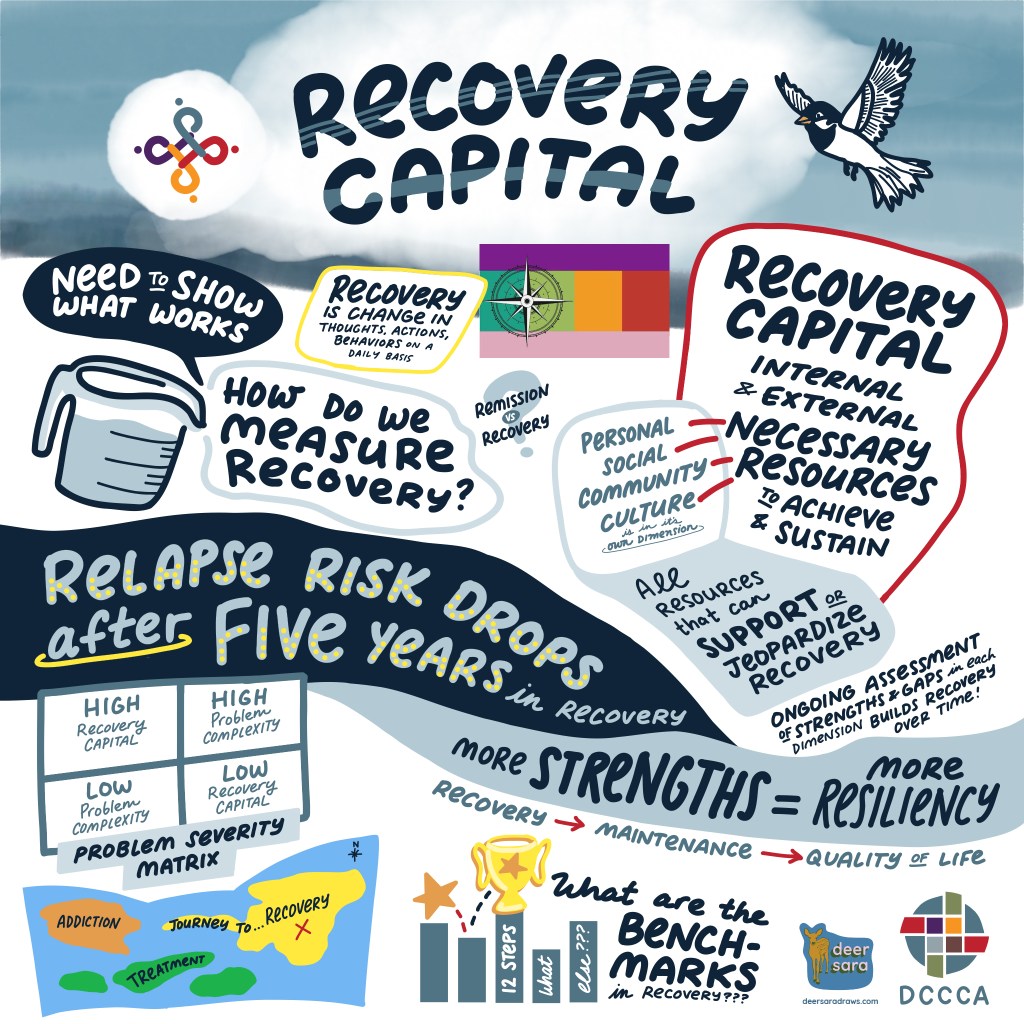
Recovery Capital refers to the necessary internal and external resources needed to achieve and sustain recovery.
Long-term recovery has benefits, but outside of the 12 steps, what are the benchmarks in recovery? How is recovery different from being in remission?
Access (or lack of access) to personal resources, social resources, community resources, and culture can all support (or jeopardize) an individual’s recovery. When an individual can assess their strengths and needs in each of these resources, they can build their recovery over time. The exciting news is that the risk for relapse drops after five years in recovery. Ultimately recovery requires maintenance.
Incarceration to Rehabilitation
Presenters: Adrienne Hearrel & Candace Davidson
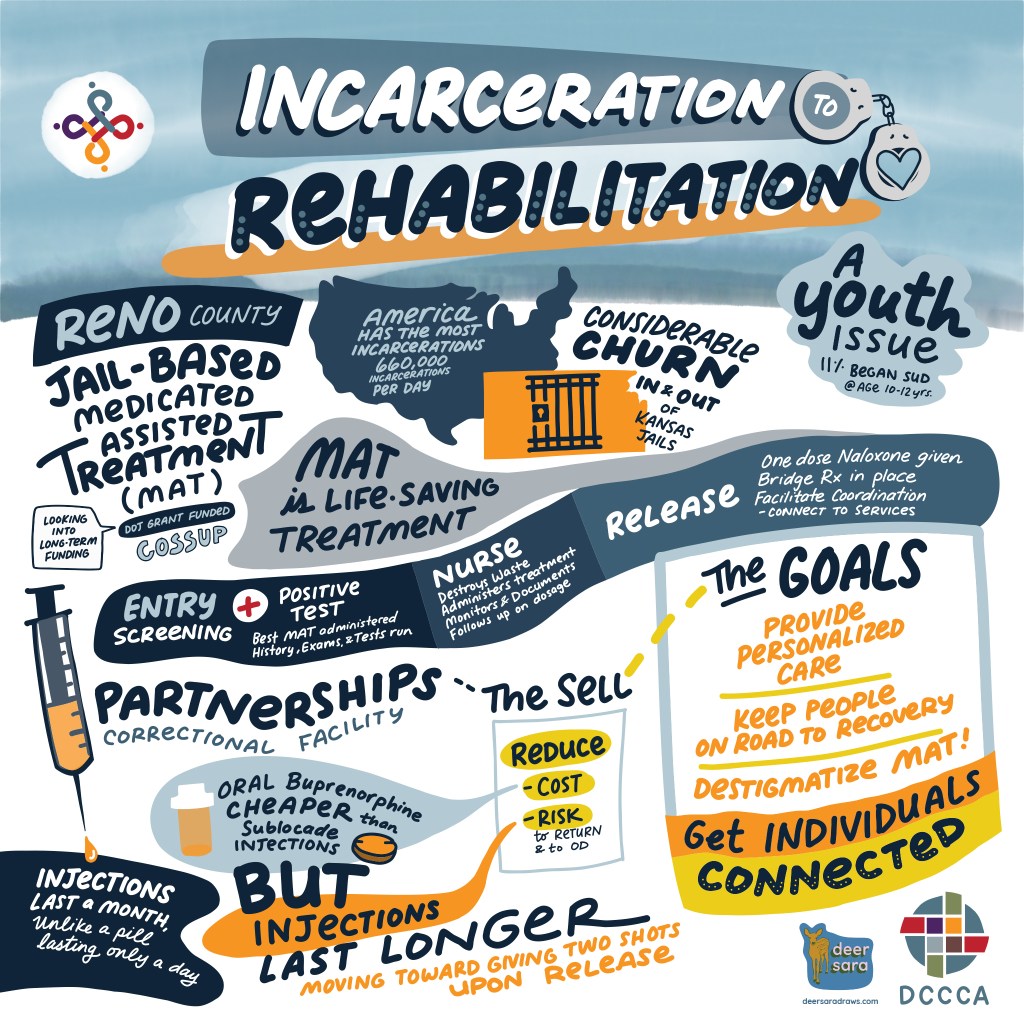
Reno County, KS correctional facility has implemented a Jail-based medicated assisted Treatment (MAT) plan for all those who screen positive for substances upon entry. MAT is know to be a life-saving treatment.
They shared their process for screening all the way to release, and their lessons learned, including upon an incarcerated individual’s release, giving injections of Sublocade for its prolonged release. They had been providing a pill, oral Buprenorphine because it was cheaper, but that would only last a day in a person’s system.
They plan to move toward giving two injections upon an individuals release, which will last longer in the body and help someone on their recovery journey on the outside. Along with the medication side of MAT, getting individuals personalized care and connection to services is key to giving a person a chance at success and keeping people on the road to recovery.
Tiffany Jenkins, A Clean Mess
Presenter- Tiffany Jenkins
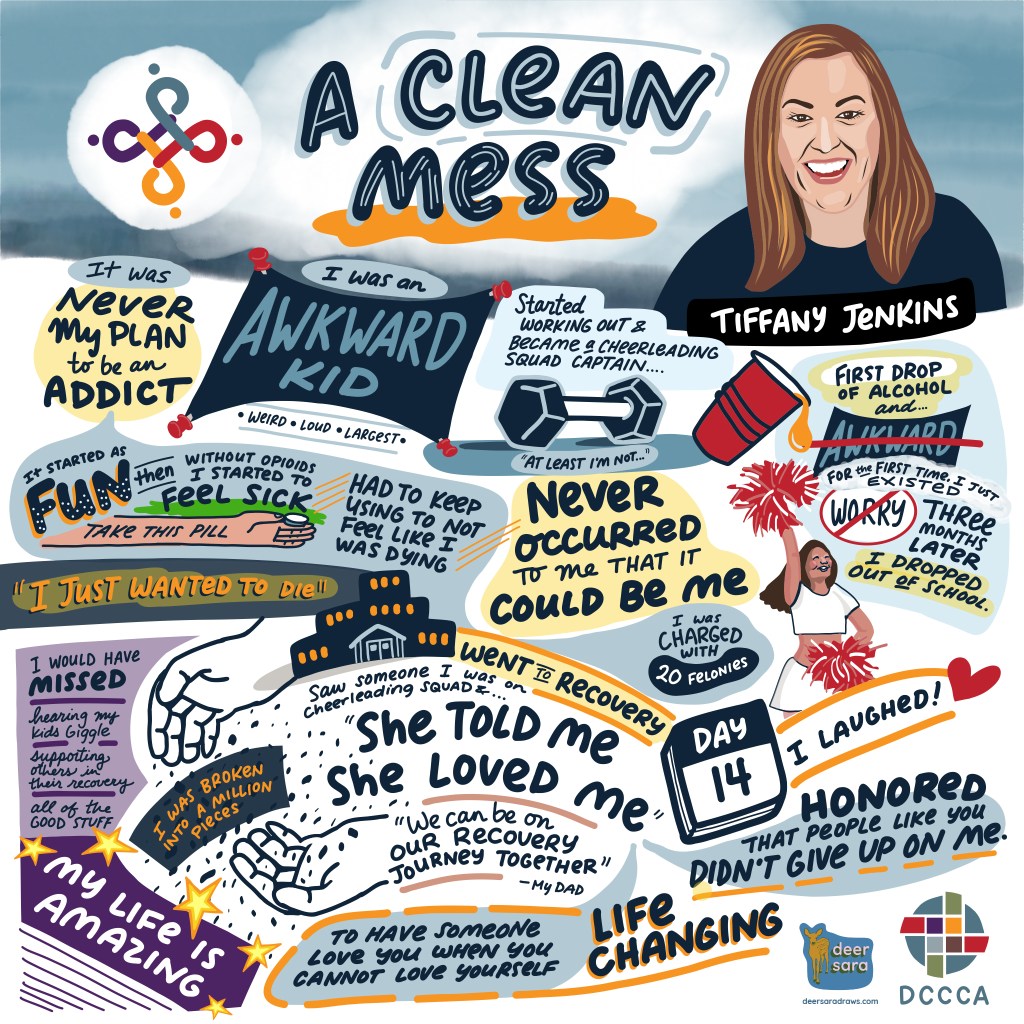
Tiffany is a speaker, writer and comedian in long-term recovery. She shared her entry into drug use: starting off as a young, awkwardly loud and large kid who started working out and became the captain of the cheerleading squad. When she had her first drop of alcohol in high school, worries and awkwardness were erased. Three months later she dropped out of high school. She started using opioids for fun and then eventually needed them to keep her from feeling sick.
20 felonies later, she went to recovery. She shared how life changing it has been to have others love her when she couldn’t love her own self and how the key to supporting people is to not give up on them.
http://www.dccca.org/kansas-opioid-and-stimulant-conference/

 deer sara draws